

HARMAN Direct Positive Paper - Natural Gloss
HARMAN Direct Positive Paper - Natural Gloss
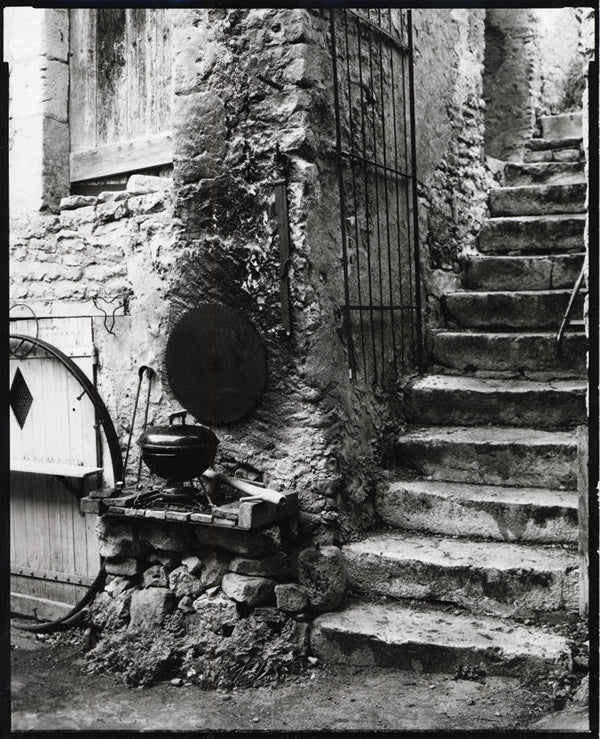
HARMAN DIRECT POSITIVE FB paper is primarily suited for use in cameras where exposure and processing in conventional black and white photo chemistry achieves a unique positive print - without the need for a film negative or inter-negative.
Creative and unusual effects can be achieved when used to make photograms or perhaps substituted for standard photo paper when printing from negatives in an enlarger.
This is a fibre based paper, please be aware that the drying can result in strong bending of the paper. This can be resolved by keeping the photo in a phonebook or similar for a week or so. Or drying using a dedicated print dryer
Excellently suited for use in Jagglé daylight developing cassettes
(second image taken from the excellent article here )
Key features
Key features
Direct Positive Imaging: Produces a positive image directly from camera exposure, without requiring a negative or internegative.
Silver-Gelatin Emulsion: Traditional silver-gelatin technology delivers rich blacks, bright whites, and detailed tonal reproduction.
High-Contrast Image Quality: Designed with a fixed, relatively high contrast, comparable to approximately grades 3½–4 on conventional variable-contrast paper. Pre-flashing can help improve tonal gradation.
Fibre-Based (FB) Baryta Base: Provides a traditional photographic paper surface with excellent image quality and a classic darkroom-print appearance.
Glossy Finish: Produces a smooth, high-gloss surface that enhances image depth, detail, and the appearance of rich blacks.
Very Low Sensitivity: Its slow photographic speed, approximately ISO P 1–3, allows controlled exposure and makes it suitable for long exposures in pinhole cameras.
Conventional Black-and-White Processing: Compatible with standard black-and-white photographic paper developers, stop baths, and fixing chemistry.
How it works
How it works
Exposure: The paper is extremely slow compared with photographic film. Start with test exposures and adjust for lighting conditions, camera aperture, and the desired image density. With direct-positive paper, increasing exposure generally reduces image density.
Pre-flashing: A carefully controlled, uniform pre-flash exposure can help reduce excessive contrast and improve tonal gradation. Determine the appropriate exposure through testing.
Development: Process using suitable black-and-white photographic paper chemistry, following the recommended developer dilution, temperature, and processing time.
Safelight: Use only a suitable deep-red ortho safelight under the manufacturer's recommended conditions. Keep the light at least 1.2 metres (4 feet) from the paper and minimise exposure to prevent fogging.
Storage: Store unused paper in its original light-tight packaging in a cool, dry environment. Protect it from heat, humidity, and accidental exposure to light.
Technical details and compatibility
Technical details and compatibility
Paper Type: Direct-positive black-and-white photographic paper
Emulsion: Silver-gelatin
Base: Fibre-based (FB), baryta-coated
Contrast: Fixed, high contrast
Image Tone: Neutral
Surface: Glossy
Photographic Speed: Approximately ISO P 1–3
Processing: Conventional black-and-white paper chemistry
Safelight: Compatible with a suitable ortho (deep-red) safelight, such as an ILFORD 906-type safelight, subject to the manufacturer's distance and exposure recommendations
What's in the box?
What's in the box?
25 sheets
GPSR Data
GPSR Data
TECCO GmbH
Buchholzstraße 79
DE-51469 Bergisch Gladbach
info@tecco.de
Couldn't load pickup availability
Share